


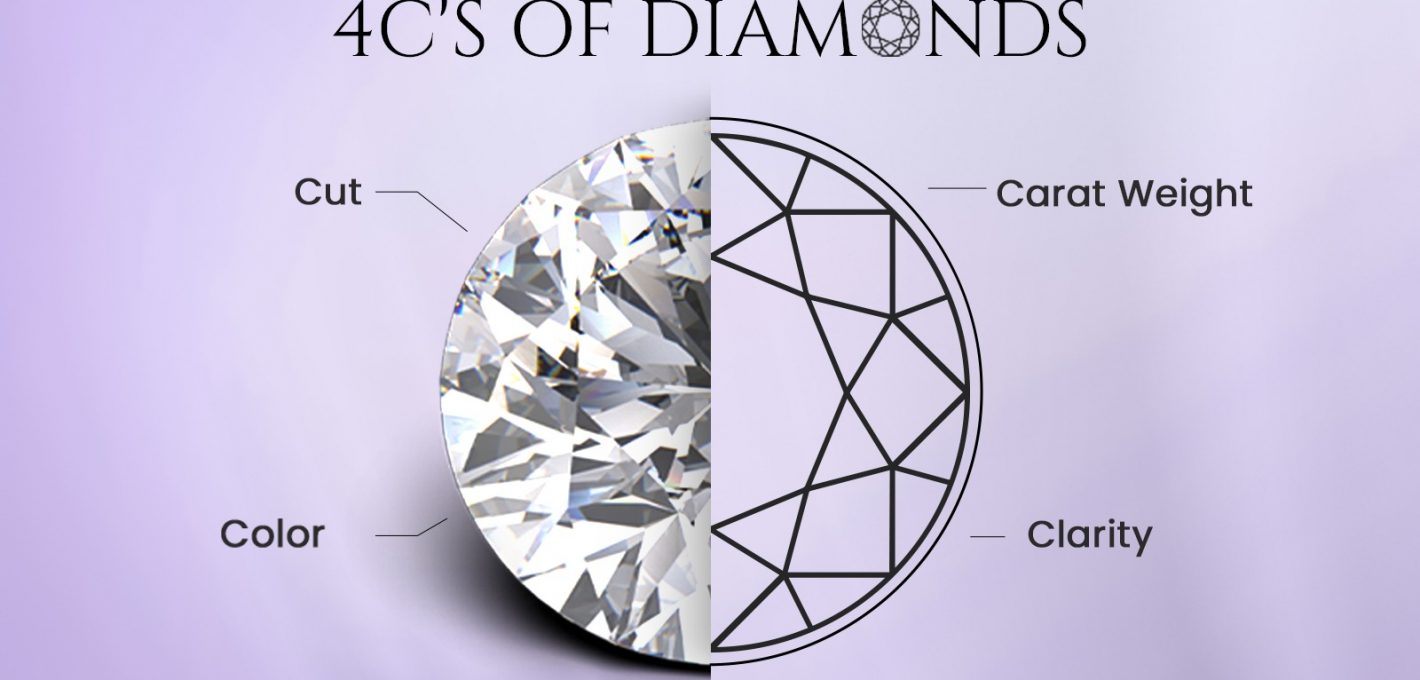
When was the last time you actually stopped and thought about what makes a diamond valuable? Most of us just hear “the bigger the better” and move on. But here’s the truth: there’s a whole science behind it, and it boils down to four little letters—the 4Cs. If you’re eyeing lab diamonds (and let’s be honest, more and more people are these days), understanding the diamond 4C chart isn’t just helpful—it’s essential.
The Backstory: Why Do We Even Care About the 4Cs?
Think about it. Diamonds have always been wrapped in mystery. They’re sparkly, they’re expensive, and they come with this whole aura of “forever.” But when you take the glitz away, what really sets one stone apart from another? That’s where the diamond 4C chart sneaks in like a backstage pass.
The 4Cs—cut, color, clarity, and carat—were first put together by GIA (Gemological Institute of America) in the mid-20th century. Before that, it was kind of a free-for-all. Jewelers used words like “river” or “cape” to describe color. Romantic, sure, but not exactly clear.
And here’s the fun twist. Lab diamonds, which are real diamonds grown in controlled labs instead of deep underground, are graded by the same system. Same sparkle, same standards. Except they don’t come with that giant mining footprint (or the eye-watering price tag).
Breaking Down the 4Cs (Without the Boring Lecture)
Alright, let’s cut to it. The diamond 4C chart might sound technical, but it’s really just a cheat sheet for figuring out if a diamond is worth your money.
-
Cut: Honestly, this is the big one. You can have a huge carat diamond, but if the cut’s bad, it’ll look dull. Think of it like a spotlight—done right, it makes the whole stage shine. Done wrong, and… meh.
-
Color: Diamonds are graded from D (colorless) to Z (light yellow or brown). Most people can’t tell the difference beyond a few grades, so don’t stress too much. Fun fact: some lab diamonds can even be made in fancy colors like pink or blue.
-
Clarity: Every diamond has tiny quirks, called inclusions. Most are invisible unless you’re staring at the stone under a microscope. Unless you’re planning on buying with a loupe glued to your eye, clarity isn’t always the dealbreaker.
-
Carat: The crowd favorite. Carat is about weight, not size. But let’s be real—people love to brag about a “2-carat stone.” Still, a smaller, well-cut diamond will outshine a big, poorly cut one every time.
See? Not rocket science.
Why Lab Diamonds Are Changing the Game
Here’s where it gets interesting. Traditional diamonds have this whole legacy thing going on—mined from the earth, millions of years old, yada yada. But lab diamonds? They’re shaking up the scene.
Why? Three reasons:
-
Affordability – You can snag a lab diamond for 30–40% less than a mined one of the same grade. That’s a big deal.
-
Ethics – No questionable mining practices or environmental guilt trips. Honestly, who doesn’t feel better about that?
-
Trends – More couples are choosing lab diamonds because they’re practical and beautiful. Social media’s full of influencers flaunting them, and guess what? Nobody can tell the difference.
And yes, they’re graded on the same diamond 4C chart. No shortcuts. No “discount” scale.
The Local Spin: Why People Are Talking About It Everywhere
Here’s a little observation. In big cities, from New York to Sydney, conversations about lab diamonds are popping up everywhere. Jewelers are even shifting their displays to feature them front and center.
It’s partly a generational thing. Younger buyers care about transparency, about where their stuff comes from. They’ll Google a jeweler’s sourcing before even stepping into a store. Compare that with older traditions where people just asked, “How big is it?” and you’ll see why lab diamonds are getting all the love.
And let’s face it—being able to say, “Yeah, it’s a lab diamond. Same sparkle, better choice” feels pretty darn good.
How to Actually Use the Diamond 4C Chart
Okay, so how do you make this practical? Here’s the non-boring way:
-
Start with cut. Always. Even a 1-carat lab diamond with an excellent cut will look like a superstar.
-
Pick your color sweet spot. Most buyers go between G and J. Unless you’re a color purist, you’ll barely notice the difference.
-
Be realistic about clarity. SI1 or VS2 usually gives you an eye-clean stone without breaking the bank.
-
Carat is about balance. Sure, go big if you want. But don’t sacrifice sparkle just to hit a number.
And here’s the best part: because lab diamonds are more affordable, you can often push for a bigger stone without blowing your budget. Win-win.
Wrapping It Up
At the end of the day, the diamond 4C chart is just a tool. A really handy one, sure, but still a tool. What makes a diamond—lab-grown or mined—special is the story you attach to it.
Lab diamonds are making that story more accessible. More affordable. More ethical. And, let’s be real, way less stressful on your wallet.
So whether you’re ring shopping, diamond-dreaming, or just curious, remember this: the sparkle isn’t about where the stone came from. It’s about what it means to you.